

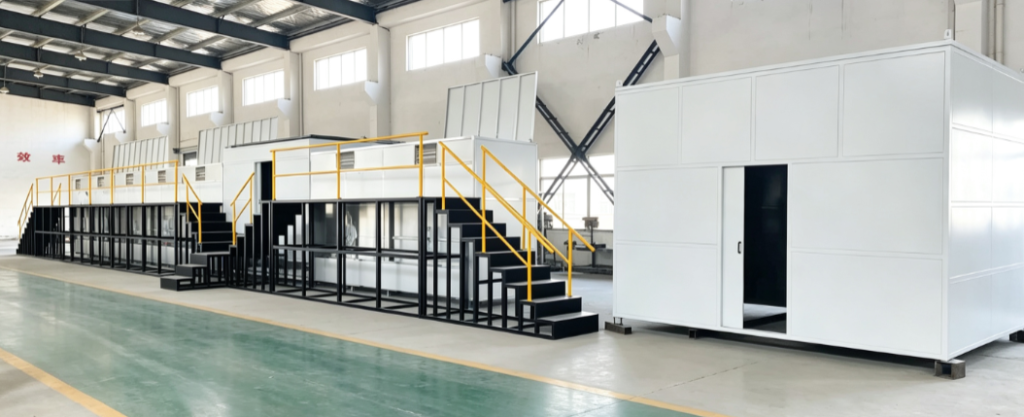
Fluorescent Penetrant Inspection System
Selecting the right fluorescent penetrant inspection (FPI) system is critical for manufacturers, NDT laboratories and inspection service providers. A qualified penetrant inspection system must not only complete required inspection procedures but also match the size, weight, geometry and production requirements of your components.
An undersized FPI system will limit future production capacity. In contrast, an oversized or over-automated system increases equipment costs, occupies more floor space and raises operational complexity.
For this reason, fluorescent penetrant inspection equipment should be selected based on the complete inspection process rather than tank dimensions or capacity alone.
This guide explains the key factors to consider when choosing a fluorescent penetrant inspection system for industrial applications.
1. Determine Component Dimensions
The first step is to define the maximum dimensions of parts to be inspected.
Key measurements to confirm:
- Maximum length
- Maximum width or diameter
- Maximum height
- Overall dimensions of fixtures or baskets (if applicable)
Component dimensions directly determine required working space, tank specifications, inspection darkroom size and material handling mechanisms.
For example, systems built for small automotive parts can use compact process tanks, while large aerospace, railway and industrial components demand much larger working zones.
Sharing component drawings and dimension data with equipment suppliers during quotation helps define a suitable FPI system configuration.
2. Check Maximum Component Weight
Component weight is another core factor for fluorescent penetrant inspection equipment selection.
Maximum part weight impacts:
- Loading and unloading solutions
- Lifting capacity
- Component transfer mechanisms
- Baskets and fixtures
- Conveyor and handling systems
A workpiece may physically fit inside a tank, yet remain incompatible if its weight exceeds the system’s load limit. For heavy components, loading and transfer plans must be considered in the initial equipment design phase.
3. Evaluate Component Material
Fluorescent penetrant testing works on suitable non-porous materials, commonly including:
- Aluminum alloys
- Stainless steels
- Titanium alloys
- Nickel-based alloys
- Other qualified dense engineering materials
Material grade is not the only consideration. Surface condition, coatings, machining finish and applicable inspection specifications also influence FPI system and process setup.
Before equipment selection, confirm required penetrant consumables and inspection procedures with your customer or responsible NDT organization.
4. Estimate Production Volume for Your FPI System
Production capacity is one of the core metrics to compare different FPI system configurations.
Evaluate these items:
- Parts per hour
- Parts per shift
- Working shifts per day
- Required takt time
- Batch size
- Future capacity expansion plans
Laboratories and low-volume production do not need fully automatic FPI lines. High-volume manufacturing benefits from automated transfer, process timing and integrated stations to improve process stability and reduce manual handling.
Specify equipment size to match real production demands instead of simply selecting the highest-capacity model.
5. Define Required Process Stations
The number of stations in a penetrant inspection system varies by application. A complete fluorescent penetrant testing workflow may include:
- Pre-cleaning
- Penetrant application
- Penetrant dwell station
- Rinsing and excess penetrant removal
- Drying
- Developer application
- UV-A inspection
- Post-cleaning
Additional auxiliary equipment may be needed for special applications, such as dedicated handling devices, filtration units, wastewater treatment or process monitoring modules.
Map out the full workflow before finalizing your FPI equipment configuration.
6. Select the Right Automation Level
Fluorescent penetrant inspection systems fall into three categories: manual, semi-automatic and fully automatic.
Manual Fluorescent Penetrant Inspection Equipment
Manual units are widely used for laboratory use, R&D testing and low-volume production. They offer high flexibility without the complexity of a fully automatic production line.
Semi-Automatic Fluorescent Penetrant Inspection Systems
Semi-automatic systems combine manual operation with automated functions. Depending on project requirements, partial automation can be applied to transfer, rinsing, drying, timing and penetrant spraying. This setup balances operational flexibility and consistent process performance.
Fully Automatic Fluorescent Penetrant Inspection Lines
Fully automatic lines integrate multiple process stations and automated material handling. They are recommended when:
- Production volume is high
- Strict cycle time control is required
- Repeatable inspection results are essential
- Full process traceability is needed
- Manual part handling should be minimized
7. Confirm Applicable Standards and Specifications
FPI equipment must be designed around inspection requirements rather than selected separately from inspection procedures.
Based on your application, customers may specify compliance with standards including:
- ASTM E1417/E1417M
- ASTM E165/E165M
- AMS 2644
- AMS 2647
- NADCAP
- Customer-specific work instructions
- Industry quality requirements
8. Wastewater and Environmental Compliance
Water is used for rinsing and excess penetrant removal in many fluorescent penetrant inspection systems. Wastewater treatment must be incorporated into the overall system design for industrial installations.
Subject to process parameters and local regulations, systems may be equipped with:
- Collection tanks
- Filtration units
- Oil-water separators
- Wastewater treatment equipment
- Controlled discharge assemblies
Environmental requirements should be discussed at the equipment design stage instead of retrofitted after installation.
Custom Fluorescent Penetrant Inspection Systems from NEWK
NEWK designs and manufactures custom fluorescent penetrant inspection equipment for industrial applications.
We avoid fixed standard machine models. Instead, we tailor each FPI system according to customer component dimensions, weight, production capacity, inspection requirements and available workshop floor space.
Systems can be configured with manual, semi-automatic or fully automatic stations, covering penetrant application, rinsing, drying, developing and UV-A inspection modules.
For large or special workpieces, NEWK provides custom tank sizes, material handling solutions, inspection darkrooms and complete equipment layout design.
Frequently Asked Questions
What is a fluorescent penetrant inspection system?
A fluorescent penetrant inspection (FPI) system is NDT equipment that applies fluorescent penetrant to non-porous components, removes excess penetrant, applies developer, and inspects parts under UV-A light to reveal surface-breaking defects such as cracks, porosity and laps.
How much does an FPI system cost?
FPI system cost varies widely based on tank size, automation level, number of process stations and customization. Manual benchtop systems start at a lower budget, while fully automatic production lines for large or heavy components require a custom quotation. Contact NEWK with your component specifications for an accurate quote.
What standards apply to fluorescent penetrant inspection?
Common standards include ASTM E1417/E1417M, ASTM E165/E165M, AMS 2644, AMS 2647 and NADCAP AC7114. Customer-specific procedures and industry quality requirements may also apply.
Should I choose spray or immersion penetrant application?
Spray application is preferred for large components, mixed part sizes and flexible operation. Immersion is better for batch processing, complex geometries and full surface coverage. The choice depends on component geometry, size, production volume and the applicable inspection procedure.
Can FPI equipment be customized?
Yes. Most industrial FPI projects require customization for tank dimensions, material handling, spray or immersion systems, drying equipment, developer application, UV-A inspection booths, PLC control and layout configuration. NEWK designs custom FPI systems around each customer’s actual components and production process.
Conclusion
Choosing a fluorescent penetrant inspection system involves far more than checking process tank dimensions.
Before purchase, comprehensively assess component size, weight, material, geometry, production volume, process needs, automation grade, workshop space, utility supplies and inspection standards.
Simple manual or semi-automatic systems are sufficient for general applications. Custom automated FPI lines deliver better performance for high-volume and special production scenarios.
The most effective selection principle: define the inspection workflow first, then design equipment around actual workpiece and production requirements.
Need help selecting an FPI system?
Send NEWK your component drawings or photos, dimensions, weight, material, production capacity and inspection requirements. Our engineering team will evaluate your application and develop a suitable fluorescent penetrant inspection equipment solution for your project.